Engaging to Build Trust in Genomics and Data Science for Health Research in Africa: Case Studies, Best Practices and Lessons from the Field
May 3, 2024
Hereditary Deafness, A Model for Precision Medicine in African Settings: Testing, Counselling and Ethical Considerations
July 8, 2024Rare Diseases Diagnosis and Research in Africa:
Genetic Literacy, Data Science Ethics and Socio-cultural Perspectives.
13 May 2024; 13:00 GMT (14:00 WAT ; 15:00 CAT; 16:00EAT)
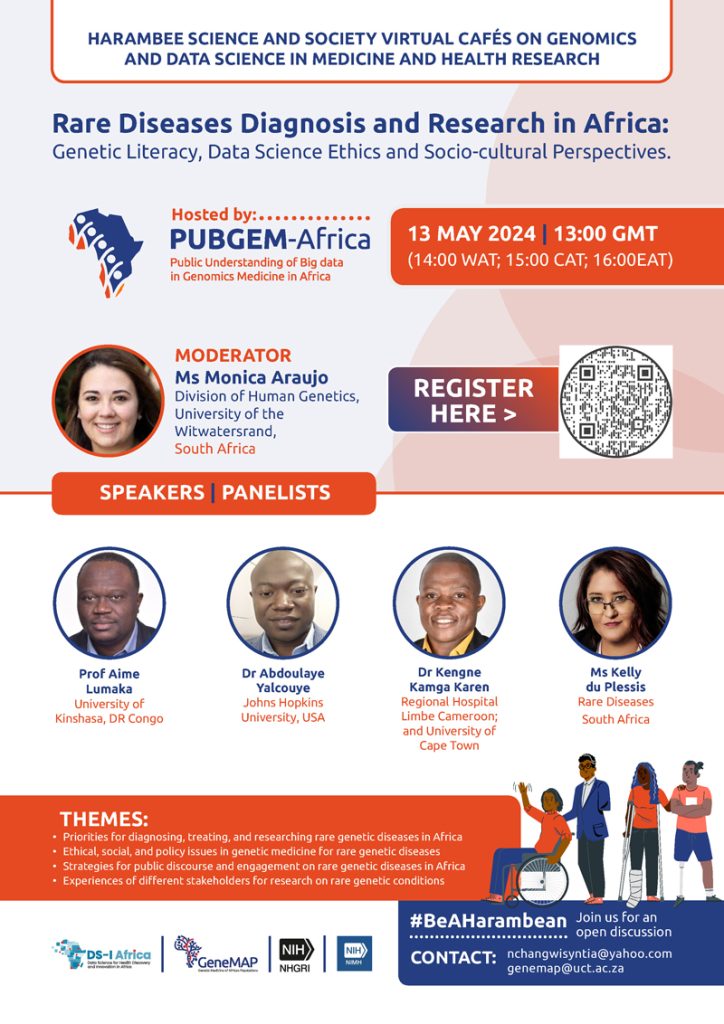
Moderator
Ms Monica Araujo, Division of Human Genetics, University of the Witwatersrand, South Africa
Speakers/Panelist
- Prof Aime Lumaka, University of Kinshasa, DR Congo
- Dr Abdoulaye Yalcouye, Johns Hopkins University, USA
- Dr Kengne Kamga Karen, Regional Hospital Limbe Cameroon;& University of Cape Town
- Ms Kelly du Plessis, Rare Diseases South Africa
Themes
- Priorities for diagnosing, treating, and researching rare genetic diseases in Africa
- Ethical, social, and policy issues in genetic medicine for rare genetic diseases
- Strategies for public discourse and engagement on rare genetic diseases in Africa
- Experiences engaging different stakeholders for research on rare genetic conditions
The second Harambee Virtual Science and Bioethics café continued with a discussion on rare diseases. The main focal points presented and discussed were genetic literacy, data science ethics, and sociocultural perspectives. The important points include, 1) informed consent and privacy, that patients understand the implications of genetic testing and that their data is protected; 2) cultural sensitivity, respecting cultural beliefs and practices when discussing genetic conditions and interventions. Effective public engagement strategies that include awareness campaigns and community involvement are essential to foster understanding and support for addressing rare genetic diseases. Additionally, incorporating the diverse experience of patients, researchers and policymakers is crucial for a holistic approach to research and address rare genetic diseases, and to ensure that policies and interventions are evidence-based.